

Water Control Structures
Southwest Florida Water Control Structures
From major flood control systems to specialized weirs, we build the infrastructure that keeps water where it belongs.
Effective flood control and water retention infrastructure is essential to protecting communities and properties across our region. We've constructed numerous water management structures — ranging from major SFWMD flood control systems to smaller county weirs and private installations that meet stringent permit requirements.
The projects showcased below demonstrate our capability to handle both standard and highly complex water control structures.
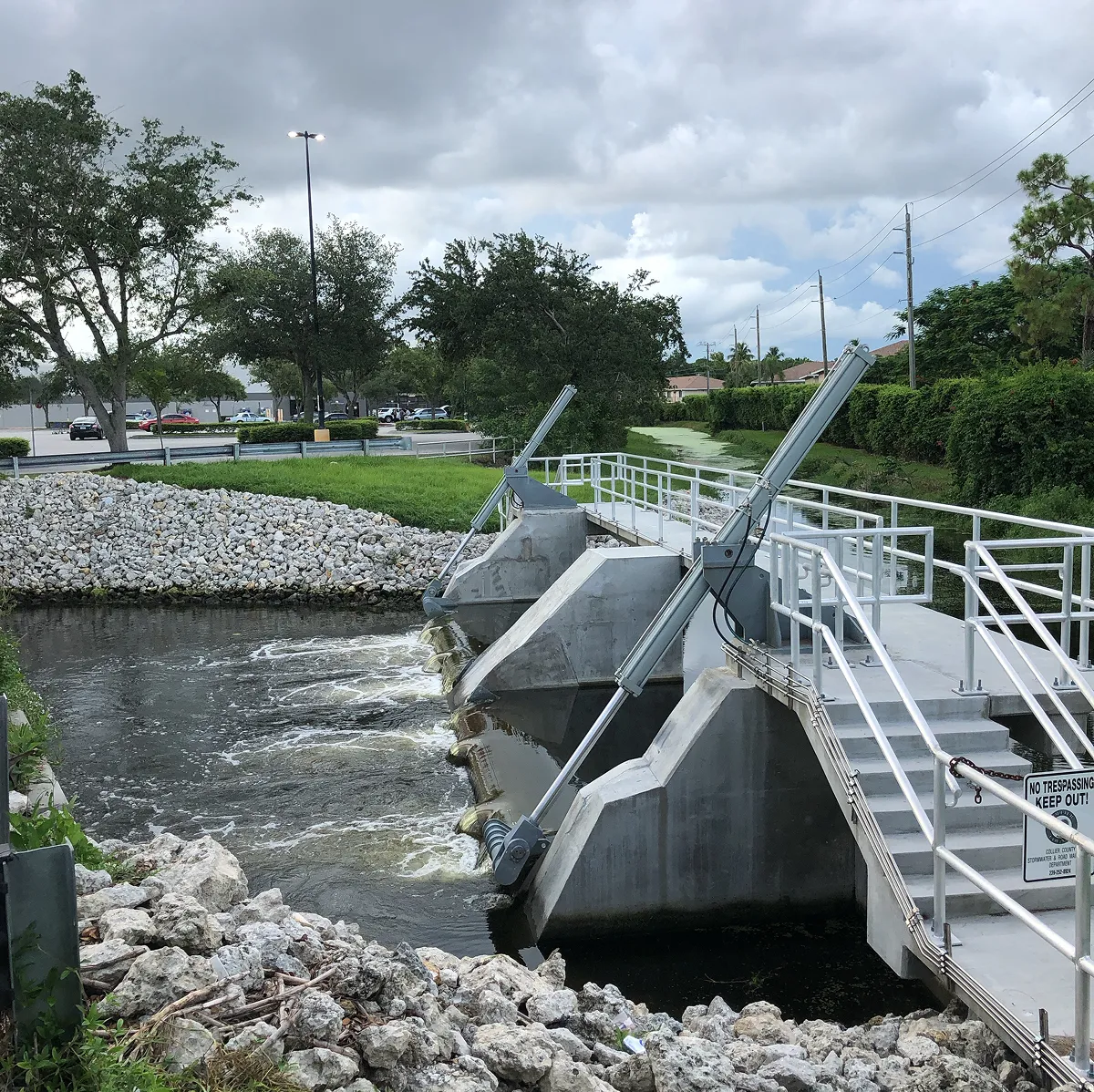
The Haldeman Creek Weir Replacement was constructed by TMC for Collier County. The hydraulicly operated crests gates offer adjustable crest elevation for wet and dry season conditions.

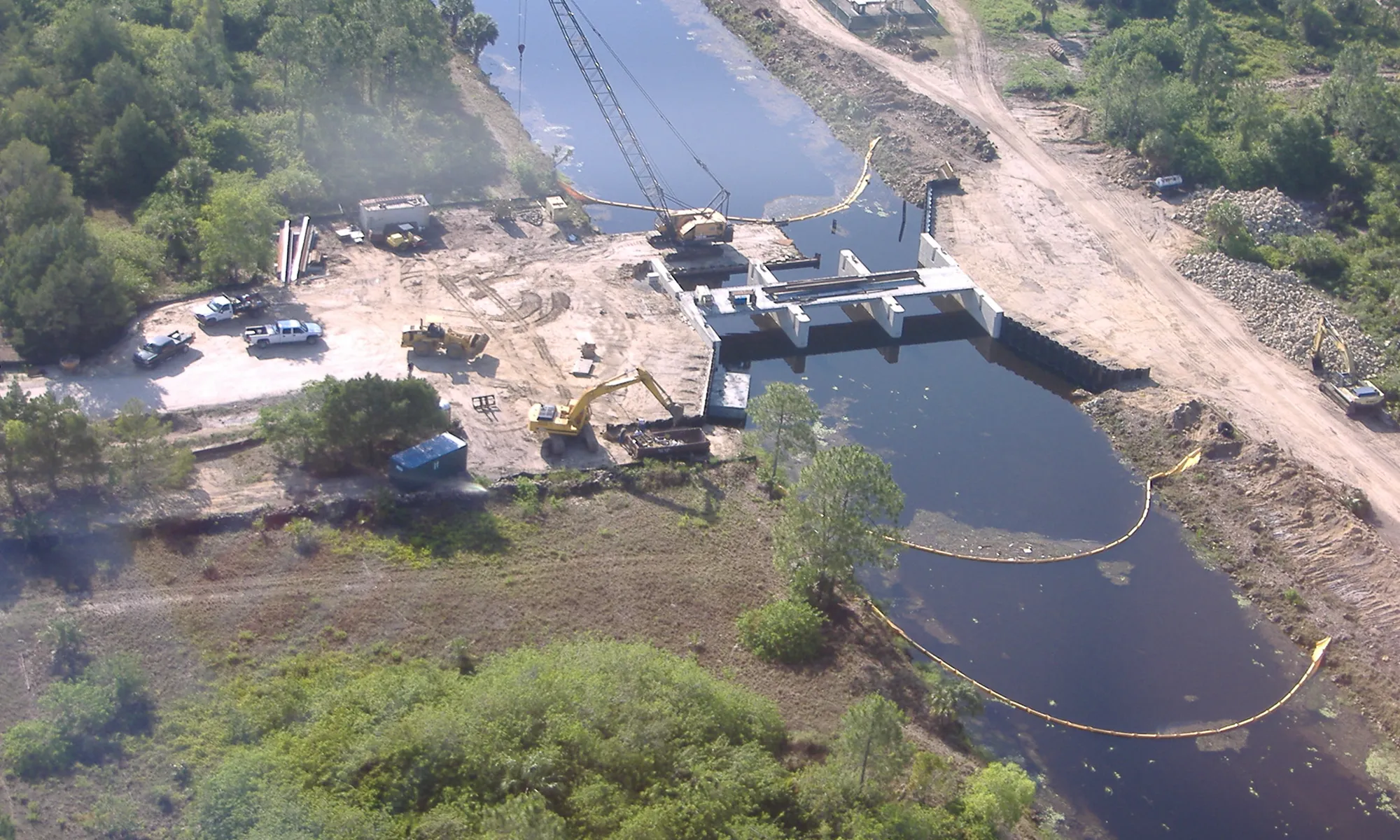
Faka Union Canal WCS # 4 was constructed with 6 bays with remotely automated custom stainless steel roller gates for South Florida Water Control District.
Large SFWMD Flood Control Structures
Primary Canals and Pump Stations: The SFWMD operates an extensive network of primary canals and pump stations designed to manage large-scale water movement across the region. The larger structures built by TMC, such as GG-2, GG-3, and FU-4, are dual purpose structures. Each allow for larger discharges after rain events in the wet season to prevent flooding and to hold back water for irrigation and drinking water supplies in the dry season. Each is completely automated for remote operation and exact water level monitoring.
Levees and Water Conservation Areas: The district maintains levees like the Herbert Hoover Dike around Lake Okeechobee and manages Water Conservation Areas (WCAs) that store excess water and help recharge aquifers. These areas act as buffers during heavy rain events, reducing the risk of downstream flooding.
Stormwater Treatment Areas (STAs): STAs are constructed wetlands that filter nutrients from stormwater before it flows into natural water bodies like the Everglades. They play a crucial role in improving water quality and managing water levels during storm events.
Smaller County-Level Weirs and Structures
Weirs: Weirs are small dam-like structures used to control water flow in local canals and waterways. They help maintain desired water levels in residential areas, agricultural fields, and natural habitats. Weirs can be adjustable or fixed and are commonly used to manage stormwater runoff and prevent local flooding.
Culverts and Spillways: These structures allow water to pass beneath roads and other infrastructure, facilitating the flow of water during heavy rains. They are essential for preventing road flooding and ensuring safe transportation routes during storms.
Detention and Retention Ponds: These ponds capture and store stormwater runoff, allowing it to infiltrate slowly into the ground or be released gradually into waterways. They reduce peak flow rates during storms, minimizing the risk of flooding in urban and suburban areas.
Erosion Control Measures: Local governments implement erosion control measures such as riprap, vegetated swales, and sediment traps to protect water channels and shorelines from erosion, which can be exacerbated by heavy rains and flooding.
Integrated Water Management
Effective water control in Southwest Florida requires a coordinated approach between large-scale SFWMD projects and smaller county-level initiatives.
This integration ensures comprehensive flood protection, water quality improvement, and environmental preservation, addressing both regional and local water management needs.
.webp)